
The importance of everyday expressions in American English
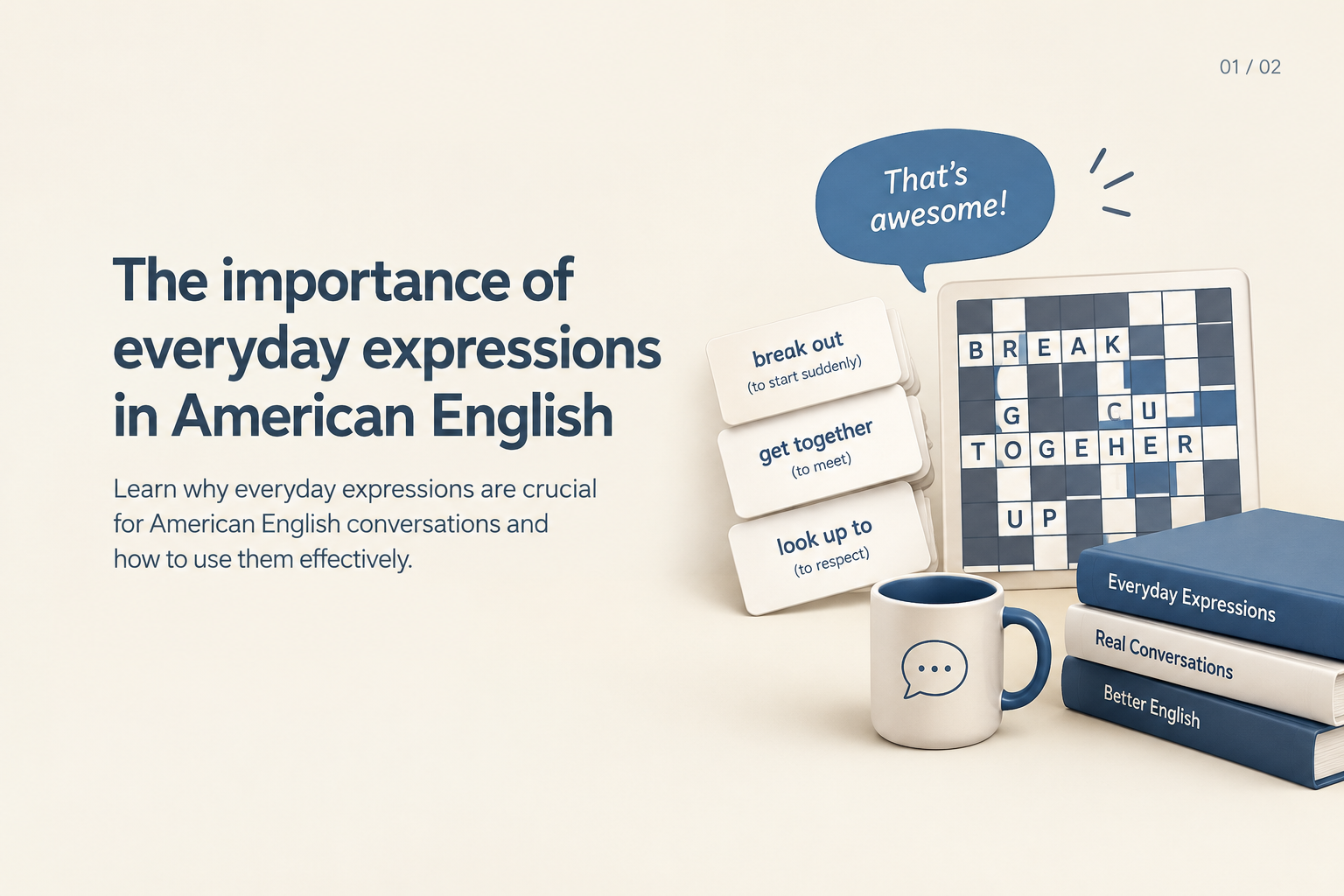
Memorizing everyday expressions in American English is essential for effective communication. These expressions often convey meanings that go beyond the literal interpretation of words, making them crucial for understanding and participating in daily conversations.
Key takeaways
- Everyday expressions enhance understanding and fluency in conversations.
- Idioms like 'step in my shoes' convey meanings beyond literal definitions.
- Regular practice with expressions can significantly improve conversational skills.
Why are everyday expressions important in American English?
Everyday expressions enrich the language and provide context that helps learners grasp the nuances of conversation. For instance, phrases like "step in my shoes" invite empathy and understanding, which are vital in social interactions. Without recognizing these idioms, language learners may struggle to comprehend the intended message, leading to miscommunication.
Moreover, using everyday expressions in American English can enhance fluency. When learners incorporate these phrases into their speech, they sound more natural and relatable. This can build confidence and encourage more frequent engagement in conversations.
How to use everyday expressions in conversations
Integrating everyday expressions into conversations requires practice and awareness. Start by listening to native speakers in various contexts, such as movies, podcasts, or conversations. Pay attention to how they use expressions and in what situations. This exposure will help you understand the appropriate contexts for different phrases.
When you feel comfortable, try using these expressions in your conversations. For example, if someone shares a problem, you might respond with, "I can see where you’re coming from," which shows empathy and understanding. Practicing in safe environments, such as language exchange meetups or with friends, can further enhance your confidence.
Techniques for memorizing everyday expressions
Memorizing everyday expressions in American English can be made easier with a few effective techniques. One approach is to create flashcards with the expression on one side and its meaning or an example sentence on the other. This method can reinforce memory through active recall.
Another technique is to group expressions by themes or contexts. For example, you could create a list of expressions related to emotions, such as "feeling blue" or "on cloud nine." This thematic organization can make it easier to remember and retrieve expressions when needed.
Additionally, using digital tools can aid memorization. There are various apps designed for language learning that offer features like spaced repetition and quizzes. Utilizing these tools can help reinforce your memory and make learning more engaging. Explore options like how to memorize expressions in american english for tailored techniques.
Practicing everyday expressions effectively
Effective practice of everyday expressions involves consistent engagement and application. One effective method is to incorporate these expressions into your daily routines. For instance, try to use a new expression in a conversation each day or write it in a journal. This practice can help solidify your understanding and usage.
Another approach is to participate in language games or activities that focus on expressions. Engaging in role-play scenarios can simulate real-life conversations, allowing you to practice using expressions naturally. You might also consider joining a group focused on daily English expression practice where you can share and learn with others.
Resources for learning everyday expressions
Numerous resources are available for learners interested in everyday expressions in American English. Online platforms often provide curated lists of expressions along with explanations and examples. Websites like list of expressions in american english can be particularly useful for finding commonly used phrases.
Books on idiomatic expressions can also serve as valuable resources. These often include exercises and context for each expression, making it easier to understand their usage. Additionally, consider exploring language learning apps that focus on idioms and expressions, as these can provide interactive ways to practice.
Finally, engaging with media such as films, TV shows, and podcasts can expose you to real-life usage of expressions. Pay attention to how characters use language in different situations, and try to incorporate similar expressions into your own speech.

In summary, mastering everyday expressions in American English is vital for effective communication. By understanding their importance, learning to use them in conversation, employing memorization techniques, practicing effectively, and utilizing available resources, learners can significantly enhance their language skills. Embrace the challenge and enjoy the journey of incorporating these expressions into your daily life.
Additional strategies for mastering everyday expressions
To further enhance your understanding and use of everyday expressions, consider the following strategies:
1. **Contextual Learning**: Instead of memorizing expressions in isolation, learn them within the context of sentences or dialogues. This helps you see how they fit into natural speech and makes them easier to recall.
2. **Shadowing Technique**: This involves listening to a native speaker and repeating what they say, mimicking their intonation and rhythm. This practice can help you internalize expressions and improve your pronunciation.
3. **Engage with Native Speakers**: If possible, engage in conversations with native speakers. This real-world practice allows you to hear expressions used in context and gives you the opportunity to use them yourself.
4. **Create Your Own Examples**: After learning a new expression, try creating your own sentences using it. This active engagement helps reinforce your understanding and makes the expression more memorable.
5. **Join Online Communities**: Participate in forums or social media groups focused on language learning. Sharing experiences and asking questions can provide additional insights into the use of everyday expressions.
By incorporating these strategies into your learning routine, you can deepen your understanding of everyday expressions and enhance your overall communication skills in American English.
Frequently asked questions
What are everyday expressions in American English?
Everyday expressions in American English include idioms, phrases, and colloquialisms used in daily conversations, such as 'kick the bucket' or 'piece of cake.'
How can I practice everyday expressions?
You can practice everyday expressions through conversation, language games, or vocabulary puzzles that focus on idiomatic phrases.
Why are idioms important for learning English?
Idioms are important because they reflect cultural nuances and enhance communication, allowing learners to understand and participate in conversations more effectively.