
Engaging Ways to Learn English Vocabulary
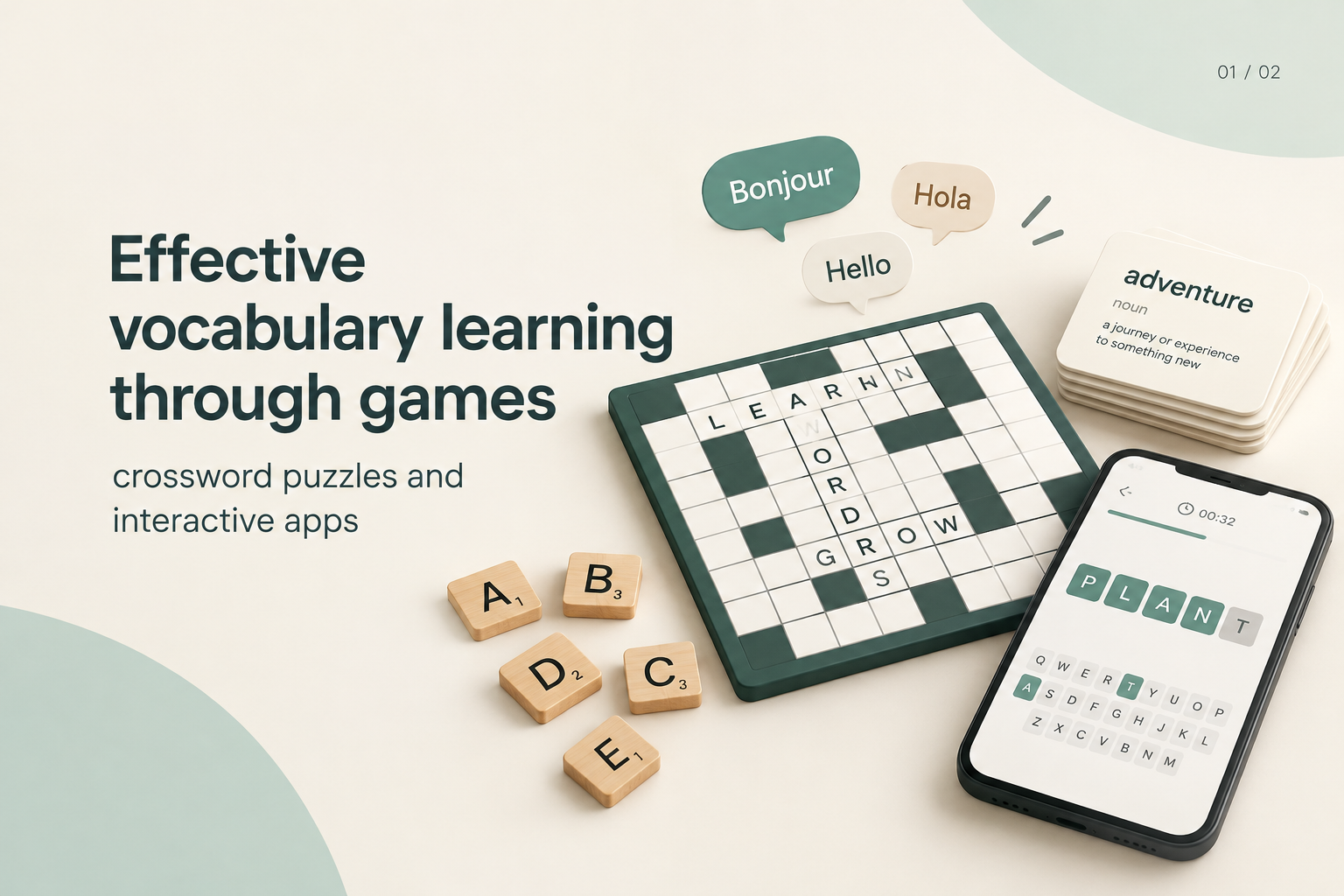
Fun ways to learn English vocabulary can significantly enhance your language skills. Engaging in language games creates a low-stress environment that fosters effective vocabulary acquisition. For example, the vocabulary practice puzzle allows learners to connect their native language with the target language through interactive play, making the learning process enjoyable and memorable.
Key takeaways
- Games like crossword puzzles can significantly enhance vocabulary retention by providing engaging contexts for word usage.
- Daily practice techniques, such as using vocabulary apps, can lead to improved language skills over time.
- Interactive vocabulary learning games are effective tools for both beginners and advanced learners seeking to expand their vocabulary.
How do language games enhance vocabulary learning?
Language games enhance vocabulary learning by providing a dynamic and interactive approach. When learners engage in games, they are more likely to retain new words as they associate them with fun experiences. For instance, solving a crossword puzzle in a language learning game encourages players to think critically about word meanings and contexts. This active participation helps solidify vocabulary in long-term memory. I recall a student who improved their vocabulary significantly after regularly playing word games, illustrating the effectiveness of this method.
What are the benefits of using vocabulary practice puzzles?
Using vocabulary practice puzzles offers numerous benefits. They promote critical thinking as players must decipher clues and connect words with their meanings. This not only enhances comprehension but also encourages learners to explore synonyms and antonyms. Additionally, puzzles like the english vocabulary puzzle provide instant feedback, allowing learners to recognize their progress and areas needing improvement. One of my students once mentioned how solving these puzzles made learning new words feel like a fun challenge rather than a chore.
How can daily vocabulary practice improve language skills?
Daily vocabulary practice is essential for language improvement. Consistent exposure to new words through various activities, including games and puzzles, helps reinforce learning. Techniques such as setting a goal to learn a few new words each day or engaging in daily vocabulary challenges can lead to significant growth in language proficiency. For instance, a simple practice of learning five new words daily can transform your vocabulary over time, making it a habit that ensures regular revisiting and retention of new words.
What types of games are effective for vocabulary retention?
Effective games for vocabulary retention include crossword puzzles, word searches, and timed word guessing games. These games challenge players to recall and apply vocabulary in different contexts. For example, crossword puzzles for vocabulary enhancement not only test knowledge but also encourage learners to think about word relationships. Timed word guessing games, like those found in Words Under Pressure, add an element of excitement and urgency, which can further boost memory retention. I often recommend these games to my students, as they find them both engaging and beneficial.
How to choose the best vocabulary apps for learning?
When selecting vocabulary apps, consider factors such as user interface, variety of games, and the ability to track progress. Look for apps that offer a range of activities, including language learning word games and quizzes, to keep the learning experience fresh and engaging. Additionally, ensure that the app provides clear explanations and examples for new words, helping learners understand their usage in context. Apps that incorporate social features, allowing users to compete or collaborate with friends, can also enhance motivation. I’ve seen students thrive when they use apps that allow them to challenge each other.
What are some fun vocabulary games for adults?
Adults can enjoy a variety of fun vocabulary games designed to challenge and entertain. Games like Scrabble or Boggle not only stimulate word formation but also encourage strategic thinking. Online platforms offer interactive vocabulary learning games that can be played solo or with friends, making it easy to practice anytime. Incorporating language games for vocabulary practice into social gatherings can also make learning a shared experience, enhancing both enjoyment and retention. I’ve hosted game nights where we played these games, and the laughter and competition made learning feel effortless.

Incorporating fun ways to learn English vocabulary into your daily routine can lead to significant language improvements. Whether through games, puzzles, or apps, the key is to engage actively with the material. By doing so, you'll not only expand your vocabulary but also enjoy the process of learning.
Frequently asked questions
What are some examples of fun ways to learn English vocabulary?
Examples include using crossword puzzles, vocabulary practice puzzles, and interactive language games that engage learners in a playful manner.
How often should I practice vocabulary to see improvement?
Daily practice is recommended, as it helps reinforce memory and increases familiarity with new words.
Can language games be effective for advanced learners?
Yes, language games can be tailored to challenge advanced learners, helping them expand their vocabulary and improve language skills.