
The benefits of crossword puzzles for language learning
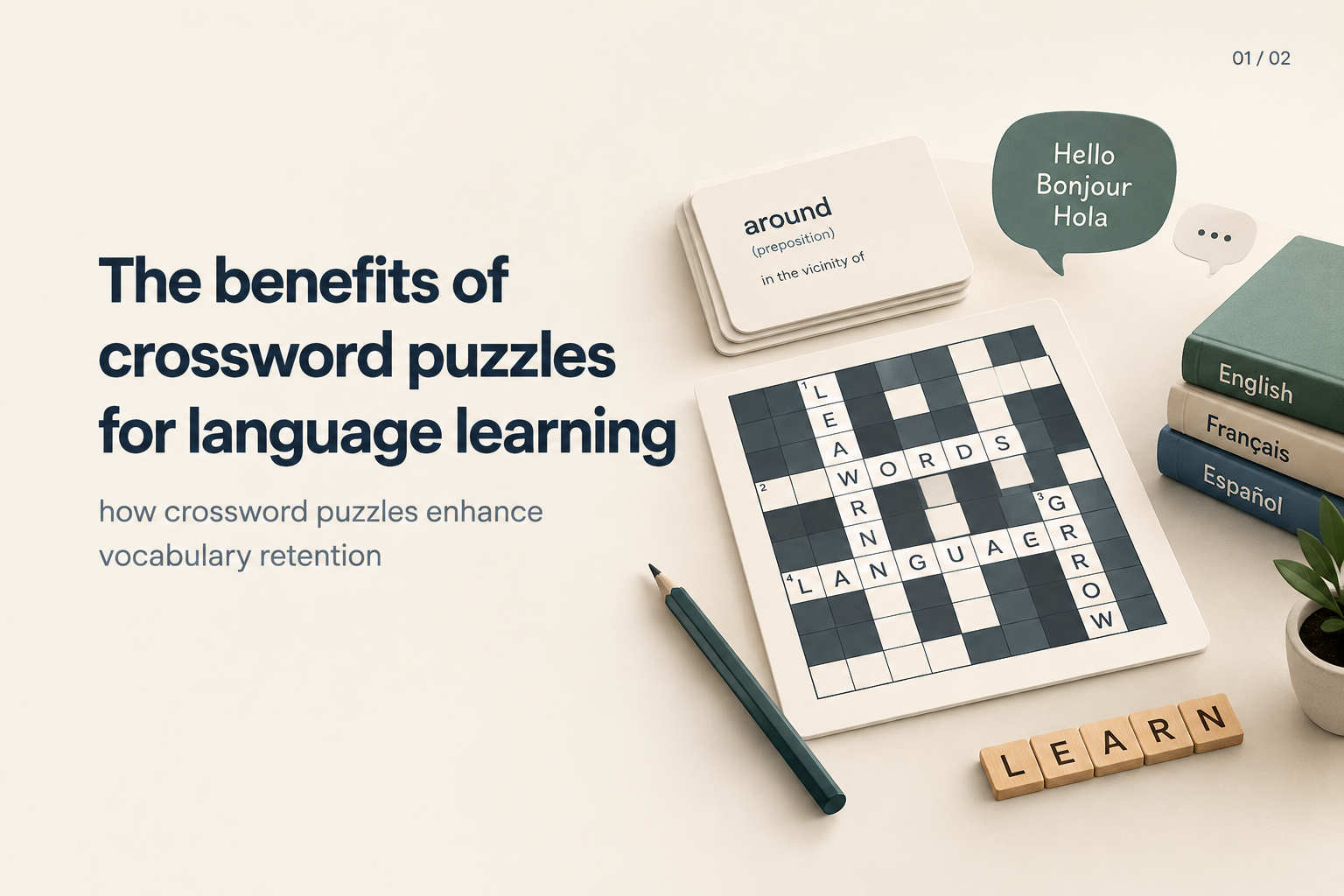
Crossword puzzles are word games that challenge players to fill in a grid with words based on given clues. Each word intersects with others, creating a network of vocabulary that players must navigate. These puzzles come in various formats, from simple grids to complex themes, and can be tailored to different skill levels. They not only entertain but also serve as a valuable tool for language practice, making them a popular choice among language learners.
Key takeaways
- Crossword puzzles engage multiple cognitive skills, enhancing memory retention and recall.
- They provide context for vocabulary, making it easier to understand and remember new words.
- Regular practice with crossword puzzles can significantly improve language fluency and comprehension.
What are crossword puzzles and how do they work?
Crossword puzzles consist of a square or rectangular grid where players fill in words based on clues provided for each row and column. The clues can range from direct definitions to more cryptic hints, requiring players to think critically about their vocabulary. The intersecting nature of the words allows players to use letters from one word to help solve others, enhancing their problem-solving skills and reinforcing their memory of vocabulary. The satisfaction that comes from completing a puzzle can also boost confidence in language abilities, encouraging further exploration of vocabulary.
Why are crossword puzzles effective for language learning?
Crossword puzzles are effective for language learning because they encourage active engagement with vocabulary. When learners tackle these puzzles, they must recall words and their meanings, reinforcing their understanding and retention. Additionally, the challenge of solving clues can motivate learners to explore new vocabulary, making the process enjoyable. This combination of challenge and fun can lead to a more profound and lasting grasp of the language. Moreover, the repetitive nature of crossword puzzles allows learners to encounter the same words in different contexts, further solidifying their understanding.
How do crossword puzzles enhance vocabulary?
Crossword puzzles enhance vocabulary by exposing learners to a wide range of words in context. As players encounter new terms, they have the opportunity to learn their meanings through the clues provided. This contextual learning is beneficial as it helps learners understand how words fit into sentences and phrases. Furthermore, regularly solving puzzles can lead to improved spelling and word recognition, essential components of vocabulary development. The act of deciphering clues also encourages learners to think about synonyms and antonyms, enriching their understanding of word relationships.
What are the cognitive benefits of solving crossword puzzles?
Engaging with crossword puzzles offers several cognitive benefits. They require critical thinking, pattern recognition, and problem-solving skills, which can improve overall cognitive function. Research suggests that regularly solving puzzles can enhance memory and cognitive flexibility, making it easier for learners to adapt to new linguistic structures. Additionally, the mental exercise involved in crossword puzzles can help delay cognitive decline as one ages, making them a beneficial activity for learners of all ages. This mental engagement can also foster a sense of accomplishment, which is vital for maintaining motivation in language learning.
How to incorporate crossword puzzles into language practice?
Incorporating crossword puzzles into language practice can be straightforward and enjoyable. Language learners can start by setting aside a specific time each week to solve puzzles, gradually increasing the difficulty as their skills improve. They can also use themed puzzles that focus on specific vocabulary areas, such as food, travel, or everyday expressions. Another effective strategy is to pair crossword solving with other language activities, like reading or speaking exercises, to reinforce learning. Additionally, discussing the clues and answers with peers can enhance understanding and provide opportunities for collaborative learning.
What types of crossword puzzles are best for language learners?
For language learners, crossword puzzles for ESL learners or those designed specifically for vocabulary enhancement are ideal. These puzzles often include simpler clues and focus on common vocabulary used in everyday conversation. Additionally, multilingual vocabulary crossword puzzles can help learners practice vocabulary in their target language while reinforcing their native language skills. The key is to choose puzzles that match the learner's proficiency level and gradually introduce more challenging content as they progress. Puzzles that incorporate cultural references or idiomatic expressions can also provide valuable context and deepen understanding of the language.
How to create your own vocabulary crossword puzzles?
Creating your own vocabulary crossword puzzles can be a fun and effective way to reinforce language learning. Start by selecting a theme or a set of vocabulary words you want to focus on. Use an online crossword puzzle maker or graph paper to design your grid. Fill in the words, ensuring they intersect correctly, and then write clues for each word based on their definitions or usage in sentences. This activity not only reinforces your vocabulary but also encourages creativity and deeper engagement with the language. Sharing these puzzles with classmates or friends can also foster a sense of community and collaboration in learning.
Conclusion: Maximizing language learning through crossword puzzles
Crossword puzzles are a versatile tool for language learning, offering numerous benefits from vocabulary enhancement to cognitive development. By incorporating these puzzles into regular practice, learners can enjoy a fun and engaging way to build their language skills. Whether through solving existing puzzles or creating their own, language learners can maximize their learning potential and enjoy the process along the way. For those looking to explore more, consider checking out language learning word games, crossword puzzles for vocabulary enhancement, and other vocabulary practice tools for learners to further enrich your experience. Engaging with crossword puzzles not only sharpens language skills but also fosters a lifelong love for learning languages. Crossword puzzles help with language learning by reinforcing vocabulary, improving spelling, and enhancing problem-solving skills. They encourage learners to think critically about word meanings and relationships. Yes, beginners can use crossword puzzles tailored to their level. Many resources offer simplified puzzles that focus on basic vocabulary and common phrases, making them accessible. Effective strategies include using themed puzzles related to specific vocabulary, solving puzzles collaboratively, and integrating them with other learning methods, such as flashcards or language apps.Frequently asked questions
How do crossword puzzles help with language learning?
Can beginners use crossword puzzles for language practice?
What are effective strategies for using crossword puzzles in language learning?